Get a Free Estimate
Deck Building & Replacement · Happy Valley, OR

Deck Building & Replacement in Happy Valley, OR

Happy Valley's position on the Clackamas upland creates the most demanding outdoor deck environment in the Portland metro: 43 inches of annual rainfall with Sandy River corridor moisture amplifying the shoulder seasons, combined with 7 average annual freeze events that stress deck fasteners, posts, and footings through thermal cycling that flat-valley Portland neighborhoods don't experience at the same frequency. The city's rapid 2000s–2015 development produced large inventories of large-lot production homes now carrying pressure-treated wood decks entering their first replacement cycle simultaneously with roofing and windows. Happy Valley's premium homeowner demographic expects outdoor living systems that match the rest of the home's quality. Left Coast Exteriors builds and replaces decks throughout Happy Valley and Clackamas County using TimberTech and Fiberon composite systems, holding Oregon CCB License 217914 and handling City of Happy Valley permits on every project.

TimberTech Fiberon TimberTech & Fiberon Authorized Dealer
TimberTech & Fiberon Authorized
Oregon CCB# 217914
Free Assessment
Itemized Estimates
City of Happy Valley Permits Handled
Know the Warning Signs

Signs Your Happy Valley Deck Needs Replacing

  • Pressure-treated wood decks on 2000s–2015 Happy Valley production homes at first replacement cycle: Happy Valley's rapid development era produced large inventories of planned-community homes — in Rock Creek, Sunnyside, and the Mount Scott area — that received pressure-treated wood decks at original construction, typically between 2003 and 2015. Those decks are now 10–22 years old, reaching the practical end-of-life threshold for pressure-treated wood in Happy Valley's elevated Clackamas upland moisture conditions. At 43 inches of annual rainfall with Sandy River corridor moisture amplifying shoulder-season loading, wood decks in Happy Valley accumulate damage from sustained wet-season exposure faster than the same specification performs in drier, lower-elevation Portland neighborhoods. Board checking, surface darkening, and fastener heads starting to rise are the typical presentations as these decks approach replacement threshold simultaneously across Happy Valley's similar-vintage neighborhoods.
  • Freeze-thaw fastener and footing stress unique to Happy Valley's Clackamas upland elevation: Happy Valley averages 7 freeze events per year — the highest freeze frequency in the Portland metro for a suburban community — because its Clackamas upland elevation and orientation toward the Cascade foothills captures cold air drainage events that Portland's valley floor neighborhoods rarely experience. Each freeze event creates contraction at deck fastener locations as wood boards contract around nail and screw shanks, followed by re-expansion that progressively loosens the connection as the ice melts. Over 15–20 years of freeze-thaw cycling on Happy Valley wood decks, that loosening is cumulative: fastener positions that were tight at installation become loose enough to rock visibly with foot traffic. This cycling also stresses post-to-footing connections, particularly on older decks where footings weren't sized for the lateral movement that freeze-thaw produces.
  • Premium homes with outdoor living spaces that don't match the rest of the home's investment: Happy Valley consistently ranks among Oregon's highest household income communities — homeowners here have invested substantially in the quality of their homes' interior systems and expect outdoor living spaces that are commensurate. A pressure-treated wood deck with surface checking, greyed boards, and spring maintenance requirements is a visual and functional mismatch with the quality standard these homes represent. The deck is typically the last exterior system on these homes that hasn't been upgraded — once roofing, siding, and windows have been addressed, a first-class composite deck completes the picture.
  • Ledger and post deterioration on the oldest Happy Valley homes with first-cycle decks: The earliest Happy Valley development — homes built in the early-to-mid 2000s — now has decks 20+ years old where ledger connections, posts, and framing are entering the phase where moisture damage from sustained Clackamas upland rainfall is measurable. Post-bottom conditions at grade are particularly relevant: Happy Valley's 43-inch annual rainfall means posts on these early homes have been in continuous wet-season moisture contact for over two decades. Before any investment in composite deck surface is made on an older Happy Valley deck, a structural assessment of framing, ledger, and post integrity confirms whether the existing structure can support a surface replacement or requires full replacement.

What Composite Decking Delivers for Happy Valley Homeowners

TimberTech AZEK's full PVC construction addresses both the sustained moisture and freeze-thaw conditions that define Happy Valley's Clackamas upland deck environment: zero moisture absorption through the long wet season, zero dimensional cycling at fastener locations through freeze events, and 30-year and lifetime warranty coverage that matches the long-term hold standard of Happy Valley's homeowner demographic. The investment differential between AZEK and pressure-treated wood is recovered in the first 5 years of eliminated maintenance and avoided early replacement on a wood deck in these conditions.

Every Happy Valley project begins with structural assessment: framing, ledger, posts, and footings reviewed before product selection. City of Happy Valley permits and inspection scheduling handled as part of every project. Oregon CCB License 217914.
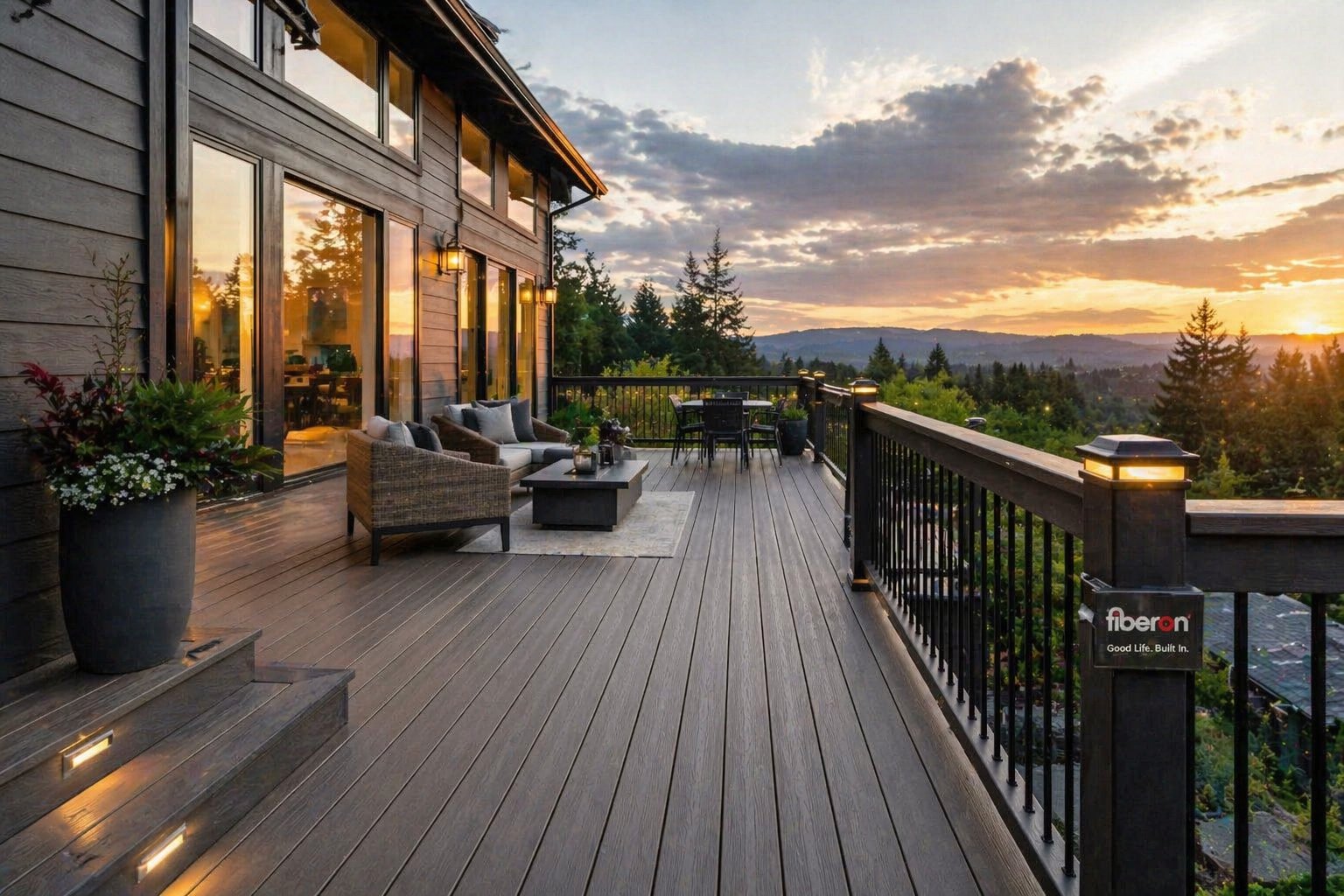

Composite deck installation on a Happy Valley, OR home by Left Coast Exteriors
Get a Free Estimate
No obligation. Usually within 1 business day.
Call or Text
360-605-0250
Request a Free Estimate
Oregon CCB# 217914
TimberTech & Fiberon Authorized
Structural Assessment Included
City of Happy Valley Permits Handled
Making the Right Call

Repair or Replace? The Honest Answer.

Not every deck problem requires full replacement. Here's how we think about it. Full deck assessment guide →

When Repair Makes Sense

Targeted Fix

  • Isolated board damage, structure sound and under 10 years old
  • Railing replacement on a solid deck frame
  • Hardware, post cap, or stair tread replacement
  • Deck under 10 years old with limited, non-structural damage
When Replacement Is the Right Move

Full Replacement

  • Widespread checking and surface rot on 2000s–2015 production home decks
  • Fastener loosening from 7+ years of annual freeze-thaw cycling
  • Ledger rot or compromised post-bottom at the oldest Happy Valley decks
  • Outdoor living standard below the rest of the home's investment level
Materials We Use

Composite Decking Built for Happy Valley's Upland Climate

We build with TimberTech and Fiberon composite systems. For Happy Valley's premium homes and Clackamas upland conditions, AZEK is our default recommendation. See our full composite decking guide →

Top Tier · Full PVC

TimberTech AZEK Premium PVC

TimberTech AZEK is full PVC — zero wood fiber content, zero moisture absorption through Happy Valley's 43-inch wet season, zero dimensional cycling at fastener locations through freeze events. The 30-year fade and stain warranty and lifetime limited structural warranty align with how Happy Valley's premium homeowner demographic thinks about a long-term home investment. AZEK permanently ends the maintenance cycle that Happy Valley's Clackamas upland climate imposes on wood decks. For the large planned-community homes in Rock Creek, Sunnyside, and Mount Scott where outdoor living is a primary feature, AZEK is the correct specification. Oregon CCB License 217914.

Mid-Grade Composite

Fiberon Composite Decking

Fiberon capped composite delivers reliable performance in Happy Valley's wet season conditions and represents a substantial improvement over pressure-treated wood — a practical alternative for Happy Valley homeowners where budget is the primary constraint or the project scope favors a mid-grade specification. Fiberon's capped construction resists Happy Valley's sustained rainfall far better than uncapped composites and performs through freeze events reliably. Backed by Fiberon's 25-year warranty. For homeowners choosing between AZEK and Fiberon, we lay out both options clearly — we install both and recommend based on your project. Oregon CCB License 217914.

Happy Valley, OR Context

Why Composite Decking Matters for Happy Valley Homeowners

Happy Valley's 43-inch Clackamas upland rainfall, freeze events, premium demographics, and 2000s–2015 housing vintage create the strongest case for AZEK composite in the Portland metro.

43-Inch Rainfall Plus Freeze Events — the Most Demanding Deck Environment in the Metro

Happy Valley combines the highest annual rainfall of any Portland suburb with the highest average freeze event count — two conditions that each individually accelerate wood deck degradation, and together produce the fastest wood deck failure timeline in the metro area. 43 inches of annual rainfall loading across Happy Valley's Sandy River corridor-amplified wet season puts wood boards through more moisture absorption-and-release cycles per year than drier Portland locations. Seven annual freeze events add dimensional cycling at fastener connections that valley-floor neighborhoods simply don't experience. Wood deck service life in Happy Valley averages 3–5 years shorter than the same specification would provide in central Portland. Composite with hidden fasteners is impervious to both mechanisms.

Premium Demographics Expect Outdoor Living Quality That Matches the Home

Happy Valley homeowners who have invested in the quality of their home's interior and major exterior systems — roofing, siding, windows — expect an outdoor living platform that reflects the same standard. A pressure-treated wood deck that requires spring pressure washing, annual sealing, and board replacement every few years is an incongruous element on a home where everything else was specified correctly. TimberTech AZEK delivers outdoor living quality that matches — and in maintenance terms, exceeds — any other major exterior system on the home. The 30-year and lifetime warranties give Happy Valley homeowners the assurance they expect on premium investments.

City of Happy Valley Permits and Oregon CCB Licensing

Happy Valley operates its own Building Department with deck permit requirements distinct from Clackamas County and Portland BDS. We handle the City of Happy Valley permit application, structural documentation, and inspection coordination on every project. Left Coast Exteriors holds Oregon CCB License 217914. The homeowner doesn't manage the permit process, and the completed deck is inspected to code and documented correctly for future resale disclosure.

Why Left Coast Exteriors

Why Happy Valley Homeowners Choose Us for Deck Building

TimberTech and Fiberon Authorized — AZEK Default for Happy Valley

Authorization from both manufacturers means access to full product lines and factory-supported warranty coverage. For Happy Valley, we recommend AZEK by default — it's the right specification for the climate and the homeowner demographic. When Fiberon is the right call on a specific project, we say so clearly and install it with the same standard. Oregon CCB License 217914.

Structure-First — Framing, Post, and Footing Assessment Before Product Selection

Every Happy Valley deck project begins with structural assessment: framing, ledger, post integrity, and footing adequacy reviewed before composite surface is ordered. On the oldest Happy Valley homes — 2003–2008 builds with decks now 15–22 years old — post-bottom and footing conditions require documentation before surface replacement decisions are made. Composite on a failing structure is a wasted investment regardless of specification tier.

City of Happy Valley Permits — Oregon CCB# 217914

We apply for the City of Happy Valley building permit, coordinate required structural inspections, and deliver a project that closes to code. Homeowners don't manage permitting, and the completed deck is properly documented for future resale disclosure. Left Coast Exteriors holds Oregon CCB License 217914 for all Oregon installations.

How It Works

Our Deck Building & Replacement Process

From structural assessment to final walkthrough, here's what a Happy Valley deck project looks like.

01

Free Structural Assessment

We assess the existing deck structure — framing, ledger connection and flashing, posts, footings, and surface condition. For Happy Valley's 2000s–2015 production homes, we note the deck's age and assess whether the structure is a good candidate for surface replacement or requires full demolition and rebuild. Oregon CCB License 217914.

02

Design, Product Selection & Written Estimate

We walk you through AZEK and Fiberon options, discuss layout, railing systems, stair configuration, and any design features. The estimate is itemized: demolition, structural work, framing, decking, railings, stairs, City of Happy Valley permit, and cleanup broken out separately.

03

City of Happy Valley Permit & Scheduling

We apply for the City of Happy Valley building permit and schedule the project once it is issued. Product is ordered in advance of the build date. We communicate the timeline and confirm before work begins.

04

Demolition, Structural Work & Installation

Existing deck demolished and removed. Structural work — ledger replacement and flashing, post and footing work — completed before new framing or composite goes on. AZEK or Fiberon installed per manufacturer specifications with hidden fastener systems. Railings, stairs, and finish elements completed before project closeout.

05

Final Inspection & Walkthrough

We schedule the required City of Happy Valley inspection and walk through the completed project with you. All demolition debris and packaging materials are removed. Permit closed, deck inspected to code, property left clean.

Common Questions

Deck Building FAQs for Happy Valley, OR Homeowners

See our full deck FAQ →

Other Services

Other Exterior Services for Happy Valley, OR Homeowners

Happy Valley's 2000s–2015 homes often have exterior systems reaching replacement age at the same time. These services are frequently combined with deck work.

Financing Available

Build Your Happy Valley Deck Now. Pay Over Time.

A TimberTech AZEK deck in Happy Valley is an investment in permanent outdoor living quality — one that eliminates the maintenance cycle Happy Valley's upland climate imposes on wood decks for the life of the home. Flexible financing lets you move forward now rather than another year on a wood deck that isn't delivering the outdoor experience your home deserves. Oregon CCB License 217914.

0% Intro APR Options
$0 Down for Qualified Buyers
12–84 Month Terms
Ask About Financing

Average Happy Valley composite deck replacement: $20,000–$42,000. TimberTech AZEK's lifetime warranty matches the long-term investment standard of Happy Valley's premium homeowner demographic.

Financing offered through third-party lenders. Subject to credit approval. Ask your project consultant for current terms and available programs.

Request a Free Estimate

Serving Happy Valley, OR and Surrounding Clackamas County Communities

We build and replace decks throughout Happy Valley and surrounding Clackamas County communities. View our full service area →

Rock Creek Mount Scott Sunnyside Clackamas Damascus, OR Portland, OR

Ready for a Happy Valley Deck Built for the Clackamas Upland?

Free structural assessment. TimberTech AZEK — our default recommendation for Happy Valley's premium homes. Hidden-fastener installation. City of Happy Valley permits handled. Oregon CCB# 217914.

Call Us Get Estimate