Get a Free Estimate
Deck Building & Replacement · Portland, OR

Deck Building & Replacement in Portland, OR

Portland's deck durability challenge is defined by its extended wet season — 36 inches of annual rainfall concentrated into a six-month stretch from November through April, with an urban tree canopy and heat island that keep deck surfaces damp well into the morning after each rain event. Portland's housing stock spans a century of development: from Craftsman homes in Sellwood and Alameda to post-war ranches in Lents and Centennial, and the wood decks on these properties wear through sustained wet-dry cycling in ways that occasional extreme-weather communities don't. Left Coast Exteriors builds and replaces decks throughout Portland and Multnomah County using TimberTech and Fiberon composite systems, holding Oregon CCB License 217914 and handling all Portland Bureau of Development Services permits directly.

TimberTech Fiberon TimberTech & Fiberon Authorized Dealer
TimberTech & Fiberon Authorized
Oregon CCB# 217914
Free Assessment
Itemized Estimates
Portland BDS Permits Handled
Know the Warning Signs

Signs Your Portland Deck Needs Replacing

  • Widespread checking, splitting, and surface rot on original Craftsman and Victorian-era decks: Portland's oldest housing stock — Craftsman bungalows and Victorian homes in Sellwood, Alameda, Sunnyside, and the Ladd's Addition area — carries wood decks that may be original construction or once-replaced, now well past their practical service life in Portland's extended marine wet season. Wood boards that show widespread surface checking (cracking along the grain) have established moisture infiltration pathways that continue to expand with each wet-dry cycle. Boards where the wood fiber compresses or crumbles when probed, or where dark staining penetrates through the full board thickness, are in active rot that board-by-board replacement cannot address — the framing and ledger connection need assessment too.
  • Ledger rot and moisture intrusion at the house connection on Portland's older home stock: Portland homes from the 1910s through 1970s — the dominant vintage across inner SE, NE, and North Portland neighborhoods — often have ledger connections that were installed without modern flashing standards. Deck ledgers attached directly to rim joists without proper flashing and drainage gaps create a moisture trap where water infiltrates behind the ledger and begins degrading both the ledger and the rim joist or band joist it's fastened to. On Portland homes with original or early-replacement wood siding, the siding-to-ledger interface is particularly vulnerable: moisture drains off the siding, collects behind the ledger flashing, and accelerates rot at the most structurally critical connection on the deck.
  • Nail pops, splintering boards, and fastener corrosion from sustained wet-dry cycling: Portland's sustained wet season doesn't produce the extreme thermal cycling of Gorge corridor communities, but it does create relentless moisture loading across November through April. Wood deck boards swell during the wet season and dry during summer, and this repeated dimensional cycling drives nail heads progressively upward from their countersunk positions. Exposed nail heads create both a safety hazard and a direct moisture infiltration point at each fastener location. Widespread nail-pop patterns across a Portland deck surface indicate the fastener integrity of the entire deck is compromised — replacing boards without addressing the fastener system leaves the replacement boards on the same failure trajectory.
  • Post and footing degradation on Portland's elevated and hillside decks: Portland's varied topography — from flat inner East Portland to the West Hills and the hillside neighborhoods of Southwest Portland — produces a range of deck structural configurations. Elevated decks on hillside lots in SW Portland's Hillsdale and Multnomah Village areas, or raised decks on the split-level homes common in outer SE Portland, concentrate structural loads at posts and footings in ways that ground-level decks don't. Posts that show visible rot at grade level, visible settlement or tilt, or soft wood that compresses when probed represent compromised structural capacity — a condition that requires assessment and remediation before new composite decking is installed.

What Composite Deck Replacement Delivers for Portland Homeowners

Composite decking doesn't check, split, or develop nail pops under Portland's wet-dry cycling — because there's no wood fiber to expand and contract with moisture content. TimberTech and Fiberon composite systems installed with hidden fasteners eliminate the surface penetration points that exposed nails create, removing the primary moisture infiltration pathway that drives decay on Portland's wood decks. For Portland Craftsman and Victorian homeowners who have been resealing or replacing boards on 5–7 year cycles, composite decking is a fundamentally different maintenance standard — one that matches the care those homes deserve.

Every Portland deck project starts with a structural assessment that addresses the framing, ledger connection, and post condition before any new decking goes on. Portland BDS permit applications and inspection scheduling are handled as part of every project — homeowners don't manage the permit process on their own, and the completed deck closes to code. Oregon CCB License 217914.
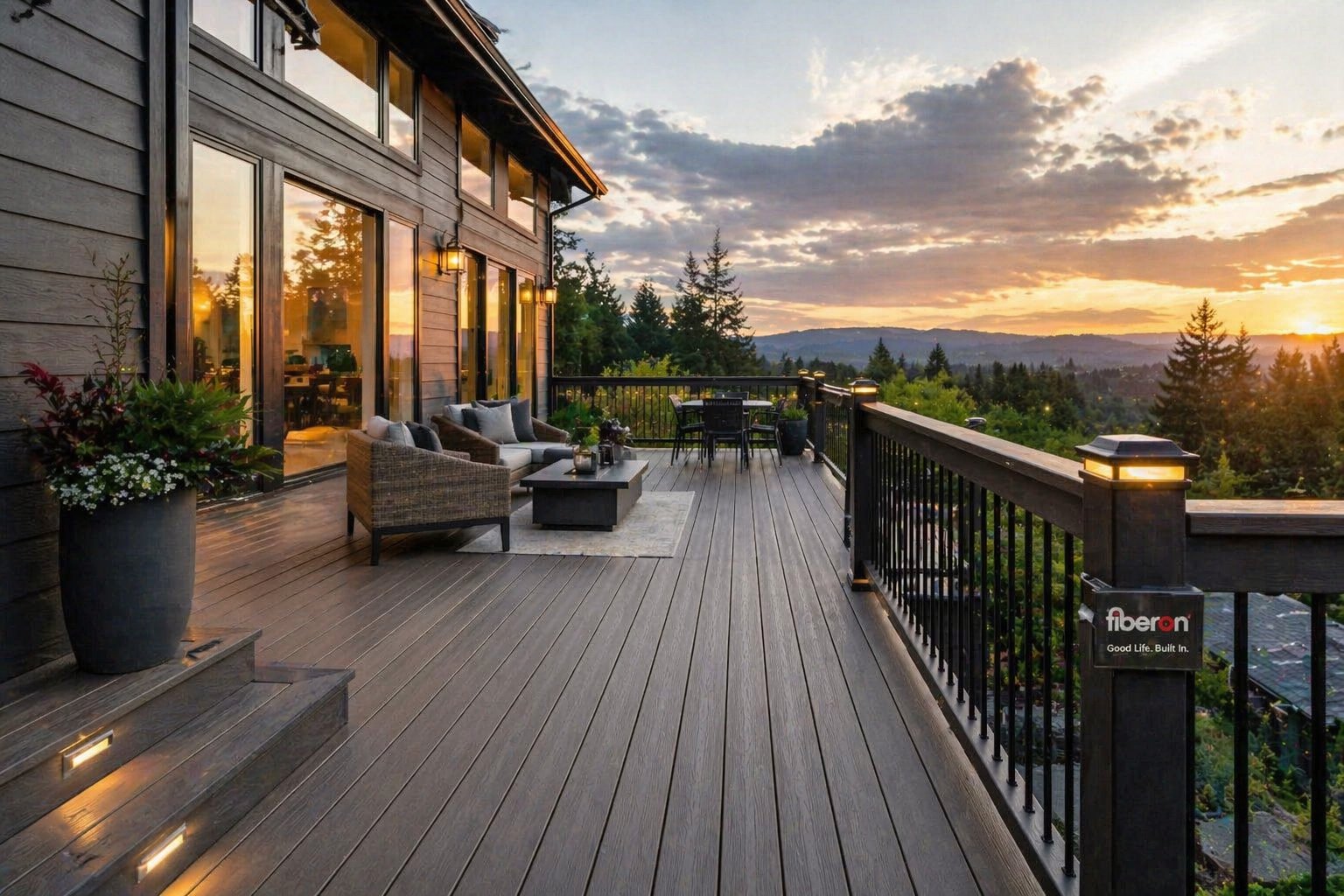

Composite deck installation on a Portland, OR home by Left Coast Exteriors
Get a Free Estimate
No obligation. Usually within 1 business day.
Call or Text
360-605-0250
Request a Free Estimate
Oregon CCB# 217914
TimberTech & Fiberon Authorized
Structural Warranty on Every Build
Portland BDS Permits Handled
Making the Right Call

Repair or Replace? The Honest Answer.

Not every deck problem requires full replacement. Here's how we think about it. Full deck assessment guide →

When Repair Makes Sense

Targeted Fix

  • A few isolated boards with localized damage, structure sound
  • Railing replacement on an otherwise solid deck frame
  • Hardware, post cap, or stair tread replacement
  • Deck under 10 years old with limited, non-structural damage
When Replacement Is the Right Move

Full Replacement

  • Widespread checking, splitting, or rot across more than 25% of boards
  • Ledger rot or compromised ledger-to-house flashing on Portland's older homes
  • Post or beam degradation at grade level
  • Deck over 20 years old with wood past its treatment life in Portland conditions
Materials We Use

Composite Decking Built for Portland's Extended Wet Season

We build with TimberTech and Fiberon composite systems. For Portland premium properties, AZEK's complete moisture immunity is our default recommendation. See our full composite decking guide →

Top Tier · Portland Wet Season

TimberTech AZEK Premium PVC

TimberTech AZEK is full PVC — zero wood fiber content, zero moisture absorption pathway, zero rot potential. In Portland's extended wet season where decks are essentially continuously wet from November through April, AZEK's complete immunity to moisture-driven degradation is a genuine performance advantage over wood-composite products. Backed by TimberTech's 30-year fade and stain warranty and lifetime limited structural warranty. For Portland Craftsman and Victorian homes where outdoor living is a meaningful part of the property's character, AZEK is the specification that permanently closes the chapter on deck maintenance and replacement cycles.

Mid-Grade Composite

Fiberon Composite Decking

Fiberon composite decking blends wood fiber with PVC and polymer capping — a well-proven mid-grade composite that performs reliably in PNW moisture conditions. Fiberon's capped composite construction resists Portland's sustained wet season far better than uncapped composites and significantly better than pressure-treated wood. Backed by Fiberon's 25-year warranty, it's the right specification for Portland homeowners who want strong composite performance without the AZEK premium — and who are ready to replace a wood deck that has been requiring attention on a 5–7 year cycle through Portland's grey winters.

Portland, OR Context

Why Composite Decking Matters for Portland Homeowners

Portland's extended wet season, aging housing stock, and urban shade conditions make composite decking the clear standard for Multnomah County outdoor living.

Six-Month Wet Season Creates Relentless Moisture Load on Wood Decks

Portland's marine climate produces 36 inches of annual rainfall in an extended wet season that runs from November through April — during which exterior wood surfaces are essentially never fully dry for more than a few days at a time. Portland's urban canopy, which provides welcome shade in summer, extends the effective wetness duration on north-facing and east-facing deck surfaces well into the morning after each rain event ends. This sustained moisture loading is the primary accelerant for checking, splitting, and fastener corrosion on Portland wood decks — and it's why the 15–20 year wood deck performance window that applies in drier climates often falls to 10–15 years in Portland conditions.

Portland's Historic Housing Stock Brings Ledger and Framing Assessment Into Every Project

Portland's dominant housing vintage — 1910s through 1970s across the city's established neighborhoods — predates modern ledger flashing and water-managed structural connection standards. When we assess decks on Portland's Craftsman and post-war homes, ledger flashing condition and rim joist integrity are always part of the structural review. Composite decking on a sound new structure lasts 25–30 years. Composite on a failing ledger fails in a different way — structurally, not just cosmetically. Our assessment-first approach finds those conditions before product selection, not after work has started.

Portland BDS Permits — Handled on Every Project

Portland's Bureau of Development Services has specific requirements for deck construction and replacement, and the permitting process involves structural review and inspection. We handle BDS permit applications, structural documentation, and inspection coordination on every Portland project. Homeowners don't manage the permit process, and the completed deck is inspected, closed to code, and properly documented for future resale disclosure. Oregon CCB License 217914.

Why Left Coast Exteriors

Why Portland Homeowners Choose Us for Deck Building

TimberTech and Fiberon Authorized Dealer

Authorization from both TimberTech and Fiberon means access to full product lines from each manufacturer, factory-supported warranty coverage, and installation training aligned with manufacturer specifications. For Portland homeowners choosing between AZEK premium PVC and Fiberon composite, we can install both and recommend based on your property and goals — not just what's most convenient to stock. Oregon CCB License 217914.

Structure-First — Ledger, Framing, and Post Assessment Before Product Selection

Every Portland deck project begins with a structural assessment of framing, ledger connection and flashing, post integrity, and footing adequacy. Portland's older housing stock brings specific structural conditions — unflashed ledgers, rim joist moisture intrusion, and post rot at grade — that require documentation and remediation before new composite decking goes on. Composite surface on a failing structure is a wasted investment. We document condition first.

Portland BDS Permits and Oregon Licensing

We apply for the Portland BDS building permit, coordinate the required structural inspections, and deliver a project that closes to code. Portland homeowners don't manage the permit process, and the completed deck is inspected and documented correctly for future Portland resale disclosure. Left Coast Exteriors holds Oregon CCB License 217914 for all Oregon work.

How It Works

Our Deck Building & Replacement Process

From structural assessment to final walkthrough, here's what a Portland deck project looks like.

01

Free Structural Assessment

We assess the existing deck structure — framing, ledger connection and flashing, posts, footings, and surface condition. For Portland's older Craftsman and mid-century homes, we specifically evaluate ledger flashing integrity and rim joist condition. You get an honest picture of what's sound, what needs remediation, and what the project scope actually involves.

02

Design, Product Selection & Written Estimate

We walk you through the TimberTech AZEK and Fiberon options, discuss layout, railing systems, stair configuration, and any special features. The written estimate is itemized by scope: demolition, structural work, framing, decking, railings, stairs, Portland BDS permit, and cleanup broken out separately.

03

Portland BDS Permit & Scheduling

We apply for the Portland Bureau of Development Services building permit and schedule the project once permit is issued. Product is ordered in advance of the build date. We communicate the timeline clearly and confirm before work begins.

04

Demolition, Structural Work & Installation

Existing deck is demolished and removed. Structural work — ledger replacement and proper flashing, post replacement, footing inspection — is completed before new framing or decking goes on. Composite decking is installed per manufacturer specifications with hidden fastener systems. Railings, stairs, and all finish elements are completed and inspected before project closeout.

05

Portland BDS Inspection & Walkthrough

We schedule the required Portland BDS inspection and walk through the completed project with you. All demolition debris and packaging materials are removed from your property. The permit is closed, the deck is inspected to code, and your property is clean.

Common Questions

Deck Building FAQs for Portland, OR Homeowners

See our full deck FAQ →

Other Services

Other Exterior Services for Portland, OR Homeowners

Deck projects often connect naturally to adjacent exterior improvements. These services are frequently combined with deck work for a complete exterior system upgrade.

Financing Available

Build Your Portland Deck Now. Pay Over Time.

A composite deck replacement in Portland is an investment in lasting outdoor living through a wet climate that's hard on wood. Flexible financing lets you move forward with AZEK or Fiberon now instead of deferring to another season of maintenance on a deck that's already past its service life.

0% Intro APR Options
$0 Down for Qualified Buyers
12–84 Month Terms
Ask About Financing

Average Portland composite deck replacement: $18,000–$38,000. A composite deck outlasts two wood replacements in Portland's extended wet season.

Financing offered through third-party lenders. Subject to credit approval. Ask your project consultant for current terms and available programs.

Request a Free Estimate

Serving Portland, OR and Surrounding Multnomah County Communities

We build and replace decks throughout Portland and surrounding Multnomah County communities. View our full service area →

See all exterior services available in Portland, OR →

Sellwood Alameda Lents Division Street Southwest Portland Gresham, OR Milwaukie, OR

Ready for a Portland Deck Built to Last Through the Wet Season?

Free structural assessment. Written itemized estimate. TimberTech AZEK and Fiberon authorized — two composite options, one honest recommendation based on your Portland property and goals. Portland BDS permits handled. Oregon CCB# 217914.

Call Us Get Estimate