Product Research
Entry doors fail differently in the Pacific Northwest than in drier climates. Steel rusts at the threshold. Wood swells and warps. Fiberglass from ProVia is engineered to perform across decades of sustained moisture, temperature cycling, and occasional high-wind events without the maintenance burden of the alternatives. This guide explains why fiberglass is the right material choice and how ProVia's product lines compare.
The Pacific Northwest's sustained moisture environment creates specific failure modes for the most common entry door materials. Steel doors are the baseline replacement option in most home improvement contexts, but steel is susceptible to rust at the bottom rail and threshold areas — the zones that contact moisture during Pacific Northwest rain events. Once a steel door begins rusting at the frame or threshold, surface refinishing does not address the structural deterioration underneath.
Wood doors offer the most authentic traditional appearance but require consistent maintenance in high-moisture environments. Sustained moisture absorption causes wood to swell seasonally, creating sticking and poor weatherseal performance. Without regular painting or staining every 3–5 years in Pacific Northwest conditions, wood entry doors develop moisture infiltration at the frame interface and eventually warp — particularly on south and west-facing exposures with direct rain exposure.
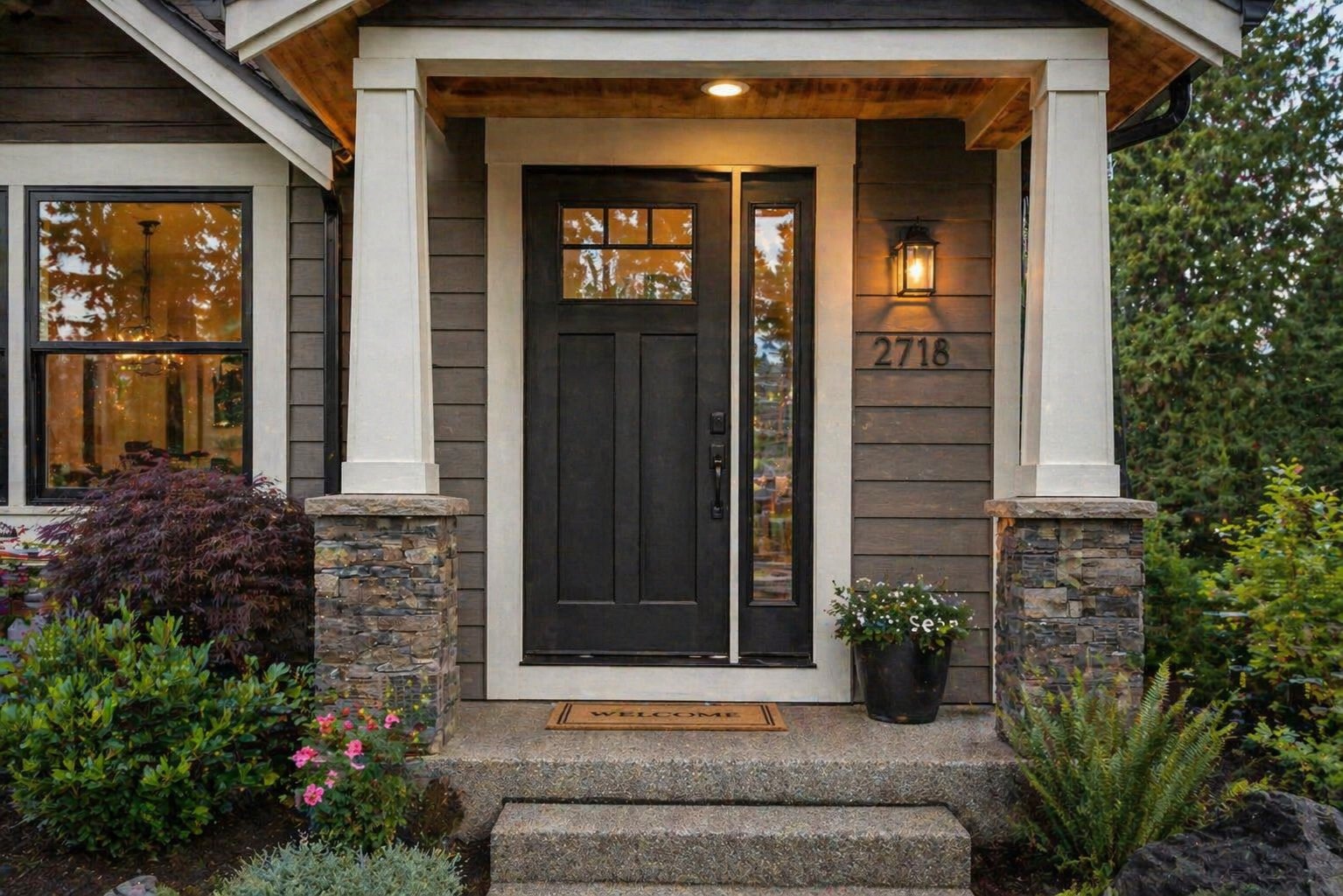
Fiberglass composite doors eliminate both failure modes. Fiberglass does not rust, does not absorb moisture, and does not swell with seasonal humidity changes. ProVia's fiberglass entry doors are precision-molded to replicate wood grain textures and panel profiles that are visually indistinguishable from wood at normal viewing distance — but without the maintenance cycle wood requires in this climate.
ProVia Authorized Dealer
ProVia distributes through a dealer network rather than retail channels. Authorized Dealer access means Left Coast Exteriors can specify the full ProVia door line — including custom sizes, glass configurations, and hardware finish options — and register product warranties on behalf of homeowners.
Related: Door Replacement Service
This page covers ProVia product education. For service scope, pricing context, and local permit information, visit our door replacement hub.
View Door Replacement Service →ProVia's three fiberglass entry door lines (Signet, Ascent, Heritage) differ primarily in panel profile depth and glass configuration range. Legacy is ProVia's steel entry door option. All share the same dealer-configured sizing, glass, and hardware customization range.
ProVia's flagship fiberglass entry door line with a deeper raised panel profile that creates more shadow depth and visual weight — closest to the appearance of a solid traditional wood door. Available in a wide range of glass options, stain colors, and hardware configurations. The right choice for homeowners prioritizing maximum curb appeal through architectural door presence.
The Ascent series emphasizes glass configuration flexibility — available in a wider range of panel-to-glass proportions, sidelite configurations, and opening size options. Particularly strong for projects where a larger glass area or a specific sidelite-and-transom combination is the design priority. A natural choice for entries with existing or planned decorative glass features.
The Heritage is a fiberglass entry door with a traditional six-panel profile suited to classic American and craftsman architectural styles common in Clark County and the Portland Metro. Available in smooth and wood-grain textures, with standard glass insert options. A practical fit for homes where the design goal is a clean, traditional fiberglass replacement without distinctive decorative glass or premium profile depth.
The Legacy is ProVia's steel entry door line. Steel offers good first-cost value and is a practical choice for budget-primary projects, covered or recessed entries with significant overhead protection, and garage access or utility-facing doors where long-term moisture exposure is lower. For most Clark County exterior-entry applications with direct Pacific Northwest rain exposure, fiberglass remains the default recommendation — steel is susceptible to rust at the threshold and bottom rail in sustained moisture environments.
What distinguishes ProVia's entry door systems for Pacific Northwest exterior performance — fiberglass (Signet and Ascent) and steel (Legacy) options available.
Fiberglass is dimensionally stable — it doesn't swell with moisture, doesn't rust at the threshold or frame fasteners, and maintains the frame geometry that compression weatherstripping depends on. ProVia's Signet and Ascent lines are fiberglass; the Legacy line is steel.
ProVia fiberglass doors (Signet and Ascent) can be stained or painted to replicate wood-grain appearances. Factory-applied finishes are available on select configurations. The aesthetic range of wood without the maintenance cycle of real wood exterior in a Pacific Northwest moisture environment.
Signet (fiberglass) offers deeper panel profiles for visual weight and curb appeal. Ascent (fiberglass) provides wider glass panel configuration range for sidelite and transom combinations. Legacy is the steel option for projects where steel is the specified material. Fiberglass vs. steel and profile choice depend on the opening, exposure, and architectural priority.
Steel offers good security and lower first cost but rusts at the bottom rail and threshold under sustained Pacific Northwest moisture — especially in older homes without adequate threshold drainage. Fiberglass does not rust, period. For homes in Clark County and the Portland Metro where the door sees sustained winter rain, fiberglass's moisture immunity is the critical performance advantage over steel.
Wood is architecturally authentic and can last 50+ years with consistent maintenance. But "consistent maintenance" in the Pacific Northwest means repainting or restaining every 3–5 years on exposed elevations, and inspecting weatherstripping and caulking annually. Fiberglass can be stained to replicate wood grain appearances with a maintenance cycle of roughly every 10–15 years depending on exposure. For most homeowners, the reduced maintenance burden is worth the trade-off.
Historic homes and architecturally significant properties where authentic materials are required by local preservation guidelines or personal preference. Covered entries with overhangs that dramatically reduce direct rain exposure. Homeowners who genuinely maintain their exteriors on a consistent schedule and prioritize authenticity over convenience. In all other Pacific Northwest applications, fiberglass wins on the durability-to-maintenance-cost ratio.
ProVia's dealer-only distribution means we can configure custom door sizes, glass panel combinations, hardware finishes, and color options that aren't available off a retail shelf. If your entry has non-standard dimensions or you want a specific architectural treatment, we can spec it.
We register ProVia product warranties at the factory level on the homeowner's behalf. The warranty is documented and on file — not just a brochure in a kitchen drawer. This matters if a product defect surfaces later.
A ProVia fiberglass door installed with inadequate threshold sealing or incorrect hinge-side shimming will allow air and water infiltration regardless of the product quality. The frame installation, threshold seal, and weatherstripping integration determine whether the door actually performs to its rated specs. We treat the installation as the product, not just the door slab.
Steel doors rust at the bottom rail and threshold under sustained Pacific Northwest moisture — once that deterioration starts, surface refinishing doesn't fix it. Wood doors swell and warp with moisture cycling and require repainting every 3–5 years in high-exposure locations to prevent infiltration. Fiberglass doesn't rust, doesn't absorb moisture, and doesn't swell. ProVia's fiberglass entry doors replicate wood grain appearances at normal viewing distances without wood's maintenance requirements.
Both are fiberglass; the difference is profile and glass flexibility. Signet has a deeper raised panel profile — closer to a traditional solid wood door appearance with more visual weight. Ascent offers a wider range of glass panel configurations and is stronger for projects where sidelite combinations or larger glass areas are the design priority. We assess the door opening, architectural style, and homeowner goals at the estimate and make a specific recommendation.
Yes — ProVia manufactures patio doors and storm doors in addition to entry doors. We spec all three product types through the same Authorized Dealer relationship. If your project involves a combination of entry door and patio door work, a single estimate appointment covers the full scope.
Simple door-for-door replacements within the same opening typically don't require a building permit in Clark County or Portland. Projects that enlarge the opening or change rough opening configuration may require permits. We assess scope at the estimate and advise on permit requirements before work begins. Portland uses Bureau of Development Services (BDS). Clark County jurisdictions vary — Battle Ground, Camas, and Ridgefield each have their own building departments; unincorporated areas are handled by Clark County directly.
The Legacy is ProVia's steel entry door option and is a reasonable choice for specific situations: budget-primary projects where the fiberglass premium isn't a priority; entries with significant overhead protection — covered porches and recessed entryways substantially reduce direct rain exposure, which narrows the moisture-performance gap between steel and fiberglass; and garage entry or utility-access doors where long-term finish maintenance is a lower priority. For most Clark County exterior-entry door replacements where the door sees direct Pacific Northwest rain, fiberglass's moisture immunity and lower maintenance cycle remain the default recommendation. We discuss the specific trade-off at every estimate and make a clear recommendation based on the opening, exposure, and homeowner priorities.
Our door replacement service covers Southwest Washington and the Portland Metro. Entry, patio, and storm door replacement in every market we serve.